Tuesday, June 25, 2019

Let it Go


My husband and I have always been Disney fanatics, but after taking our daughter to Disney for the first time before her 2nd birthday, and witnessing her joy and amazement at what she saw, we have dug ourselves even deeper! Since that first trip, we've been back at least once a year. Every time we go, we say we are going to pick a different vacation spot for the next one, but we are yet to do so!

I can vividly remember watching Aladdin, Beauty and the Beast and especially The Lion King as a child. The Lion King held a special place in my heart because Jonathan Taylor Thomas (swoon! 😜) was the voice of Simba. (I'm looking forward to the live action release in July!)


Disney movies play an overwhelming role in our children's lives.  We play Disney Guess Who, my kids have made up their own Disney character guessing game, and most difficult life experiences can be compared to a Disney character/situation. For example, I was recently talking about "stranger danger" with my kids and I was giving them the scenario of a stranger coming up to them offering them candy or to see their animal.  I described the person as appearing to be kind/sweet/innocent, like the witch in Snow White when disguised as the old lady with the apple, but that the stranger may have evil intentions...like feeding them a poisonous apple!


I can't say that my own memories are reflected in Christensen's claims, as I was FAR from the princess type as a child....I was more of a "Merida!" However, I will say that the one thing that resonates with me to this day is impression of perfection (page 185) that the princesses and all media reflect. Many women (adults, teens, and children) strive to reach a level a perfection that only exits through an intense editing process.


Earlier she mentions that she is uncomfortable with the myth that marriage is the "end goal" for women leads women to treat other women as their competition rather than a "sister." When reading this, I was immediately reminded of the following skit Chris Rock performed.

(**Contains explicit content )


I connected more with Christiansen through my mommy lens. My daughter has been obsessed with all things princess since birth. She does not like winter clothes because she says they "make her look like a boy." She wants tank tops for her birthday, "but not the sporty ones - cute ones." For her theater camp last year she chose the camp down in South Kingston (instead of Cranston) because Shrek (the Cranston play) "was for boys." When I pointed out that Princess Fiona is a girl, she informed me that she doesn't count because she is not pretty! 😟


On page 180, she mentions the stereotype of the "evil stepparents." This stood out to be because just recently, my daughter asked my cousin why she was texting "Auntie Susan" and when my cousin replied by explaining they were close or something like that. My daughter expressed utter confusion because she thought stepmothers were evil!


Frozen challenges these stereotypes in a few ways. The most obvious way *spoiler alert* is that true love's kiss is not the kiss of the "knight in shining armor" but rather of her sister. Throughout the movie, the viewer is first led to believe that Prince Hans will be the "cure" to a frozen heart, but we quickly are led to "jump ship" and route for Christof to be the magic cure. Low and behold, it is neither man who holds the power to thaw a frozen heart. Instead of it is the unconditional love of sisters that breaks the curse.


Another aspect where Frozen breaks the mold is that Christof, for the most part, wants nothing to do with the rescue mission of Elsa. He wants to just be left to do his own thing but Anna is insistent on pursuing the journey with or without him.

The History Teacher

Monday, June 24, 2019

It's Complicated


I have mixed feelings about both authors/ideas. When we discussed Prensky in class, I was thinking, "yes! yes! yes!" But then as I was reading Boyd...I had the same thoughts. For me it is an "and/both" situation. I think people can also read too deeply into the term "native." As we read/hear "digital native" we assume that means fluency. My grandmother was born in Italy...she was an Italian native - but she came to the United States at such a young age that she related/identified FAR more as an Italian-AMERICAN, than an Italian native. On the contrary, by husband did not come here until he was in his early 20s, so he identifies more as a Dominican Republic native than a US/NY native. The difference is easily noted when meeting new people. If you had met my grandmother and asked where she was from, she would tell you, Providence. Although my husband has been in the U.S. almost equally as long as the Dominican Republic at this point, if you ask him where he is from, without hesitation, he will tell you he is from the Dominican Republic.
Image result for italian american . Image result for Dominican pride

When we think of digital literacy as a comparison to language, we can see how the levels of proficiency can fluctuate. Some digital natives may get much more exposure to the language than others. Some simply be born in a world where the technology exists, but not have access to it, or access to help expanding on it. This digital native could be compared to a second generation of immigrant. The child is native to this country, but at home he/she is most likely surrounded by a culture and language that is different from other native U.S. children - therefore, they may not become as fluent in American culture in customs. On pg 177, Boyd says, "It is dangerous to assume that youth are automatically informed. It is also naive to assume that so-called digital immigrants have nothing to offer."  The example of a second generation immigrant can be applied to this quote as well.  If we encounter a second generation immigrant in our classroom, we should not assume they are fluent in their "native language."  In fact, most of the students I have encountered who come from families born in Spanish-Speaking countries, have a basic understanding of the native language, but in fact, are not fluent in Spanish.  (This particular example relates back to our SCWAAMP discussion - since English is so valued, many immigrant families do not enforce their children learning their native language and instead encourage them to learn English.)

On pg. 196, Boyd says, "I believe that the digital natives rhetoric is worse than inaccurate: it is dangerous. Because of how society has politicized this language, it allows some to eschew responsibility for helping youth and adults navigate a networked world."  I disagree that the term itself is inaccurate but whole heartedly agree with the downfall of how society interprets that terminology.  I also think it's important to note the mention that we push off the responsibility for helping youth (digital natives).  We often assume that because students may be active on social media that they are computer/tech literate.  Using a computer/device for academic purposes is very different than social use.  I use Google Classroom with my high school students, and most have difficulties throughout the whole first quarter.  They don't know how to save/update passwords.  They do not know how to toggle between their personal gmail and their school gmail.  If their personal gmail is integrated into their phone, when Google Classroom opens up Google Docs, it will default to their personal email and they will not have access-most cannot resolve this issue independently.  

Overall, I like the term digital native - I believe that is what these students are; they do not know a world without technology.  However, just like any other language, the student's digital fluency can vary based on the exposure and instruction they have received.   

In this YouTube clip, Ellen talks with some digital natives about older technology. While these children may not be fluent, they have grown up in a world where these once amazing devices are now obsolete compared to the current technology.

I am Bilingual

I was born and completed Lincoln High School long before you could ask Siri, Alexa, or Google anything.  I enjoyed talking on the phone (a landline) with my friends and when "dial up"
via GIPHY

first came out, there were MANY arguments between my brother and I about who should take control of the landline and for how long.  I can remember many times intentionally picking up the phone to kick him off and take control of the line!  When writing research papers, even in college, I had to go to the physical library and take notes on paper from actual books to complete the assignment.  Therefore, I cannot say that I am a digital native.

However, I do believe I am bilingual.  I consider myself to be pretty tech savvy, especially with regards to the Google suite and Apple Photos.  I have become interested in the Apple Photos app because of my kids.  At this moment, on my camera roll alone (not including the photo stream/cloud) I have 2,249 photos and 487 videos and that is only about 1 year's worth of photos.  Since my kids are digital natives - they are obsessed with YouTube and YouTubers (or "yube" tube as my son says) and have created (with our help) their own YouTube channel...we are looking for subscribers.  😉


About Me


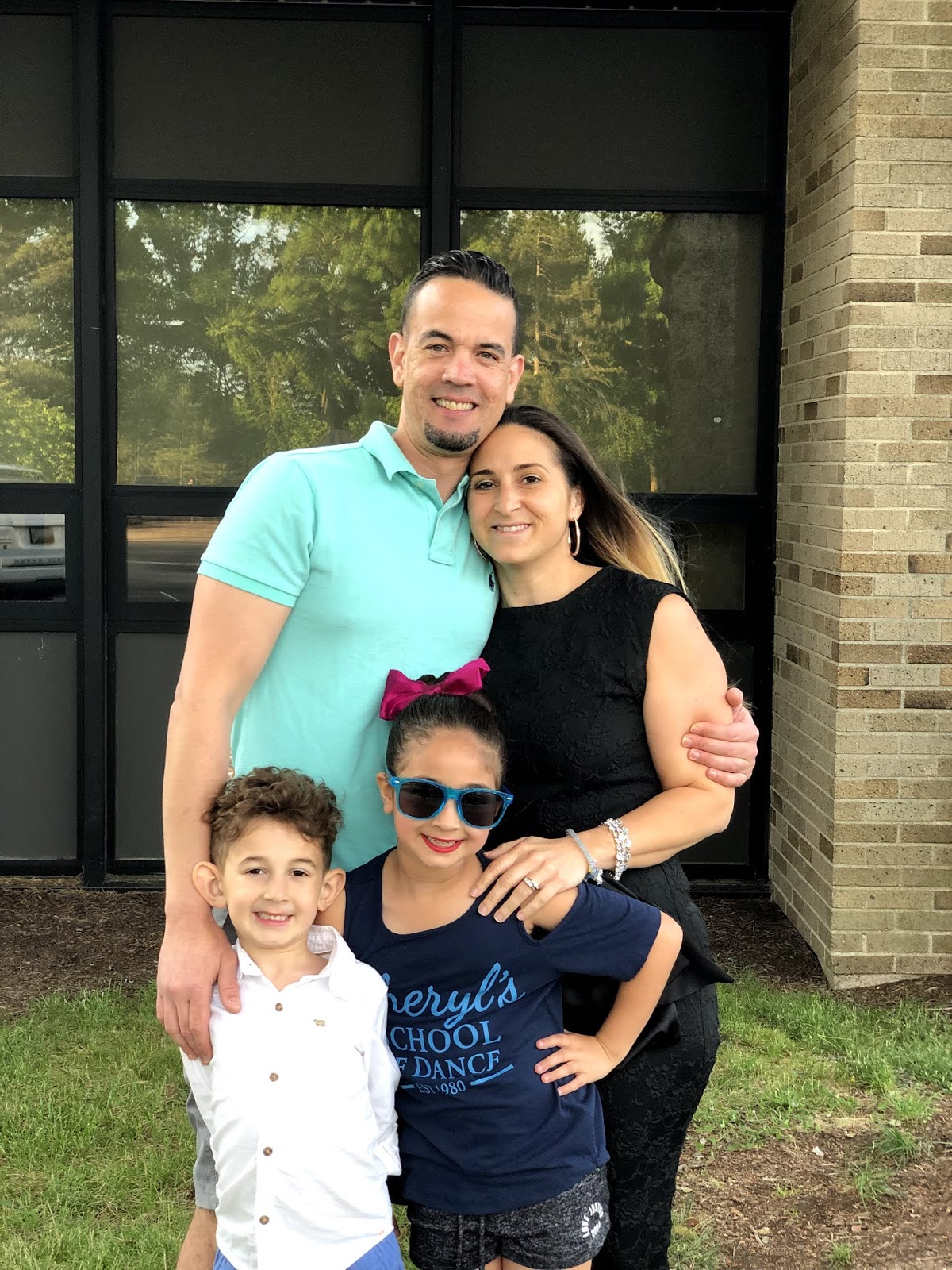
My name is Stefanie.  I am a wife (of 1) and mother of 2.  Laura is almost 8 and Brayden is 5.  Summer has been ... only 2 days so far, but they were a good two days.  We have seen both the new Aladdin as well as Toy Story 4, so I'm a little nervous about Dr. Bogad shattering the magic of Disney on Wednesday.  When I am not in class, I am with my kids.  We either hang out at home or are out and about on some local "adventure."  I try to fit in some time for a workout whenever possible.